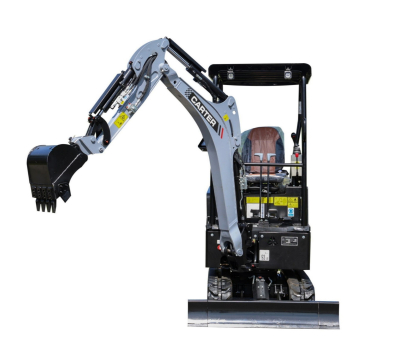
50 T large excavator
Technical Parameters and Specifications
Operating Weight: 48,500–52,000 kg
Engine Power: 260–320 kW (ISO 9249)
Bucket Capacity: 2.2–3.2 m³ (rock/earthmoving options)
Maximum Digging Depth: 7,000–7,500 mm
Maximum Reach at Ground Level: 10,800–11,200 mm
Maximum Digging Force: 250–290 kN
Hydraulic System Pressure: 32–36 MPa
Travel Speed: 3.0–5.0 km/h
Fuel Tank: 650–750 L
Undercarriage Width: 3,300–3,900 mm (extendable)
Definition of a 50 T Large Excavator
A 50 T large excavator is a heavy-duty earthmoving machine designed for high-output mining, quarrying, and infrastructure engineering. It features a robust hydraulic system, reinforced boom structure, and high digging force suitable for continuous high-load cycles in industrial operations.
Technical Parameters and Specifications
Operating Weight: 48,500–52,000 kg
Engine Power: 260–320 kW (ISO 9249)
Bucket Capacity: 2.2–3.2 m³ (rock/earthmoving options)
Maximum Digging Depth: 7,000–7,500 mm
Maximum Reach at Ground Level: 10,800–11,200 mm
Maximum Digging Force: 250–290 kN
Hydraulic System Pressure: 32–36 MPa
Travel Speed: 3.0–5.0 km/h
Fuel Tank: 650–750 L
Undercarriage Width: 3,300–3,900 mm (extendable)
Structural and Material Composition
Main Structural Modules
Upper Frame: Welded high-strength low-alloy steel, designed for torsion resistance.
Boom and Arm: Reinforced plates (yield strength 690 MPa) with multi-layer robotic welding.
Hydraulic System: Variable-displacement axial-piston pumps with load-sensing control.
Undercarriage: X-frame structure with hardened track links and sealed rollers.
Cab: ROPS/FOPS certified, laminated glass, integrated operator assist systems.
Powertrain: Turbocharged diesel engine with high-pressure common-rail fuel system.
Manufacturing Process
Engineering Workflow
1. Material Preparation: Cutting high-strength plates using laser/plasma cutting systems.
2. Structural Welding: Robotic welding stations ensure joint strength and uniformity.
3. Machining: CNC machining centers produce precise boom seat, swing bearing housing, and hydraulic interfaces.
4. Surface Treatment: Shot blasting, primer coating (anti-corrosive), and polyurethane painting.
5. Powertrain Integration: Engine, pumps, motors, and valves calibrated to ISO testing standards.
6. Hydraulic System Assembly: High-pressure hoses and valves undergo leak and burst tests.
7. Final Testing: Load tests, digging cycle simulation, and electronic system calibration.
Industry Comparison
| Category | 50 T Large Excavator | 35 T Excavator | 70 T Excavator |
|---|---|---|---|
| Operating Weight | 48–52 T | 33–37 T | 68–75 T |
| Bucket Capacity | 2.2–3.2 m³ | 1.6–2.0 m³ | 3.5–4.6 m³ |
| Digging Force | 250–290 kN | 180–210 kN | 320–360 kN |
| Fuel Consumption | 28–36 L/hr | 20–24 L/hr | 38–46 L/hr |
| Application | Quarrying, mining, heavy construction | General construction, earthmoving | Large mines, mass excavation |
Application Scenarios
EPC Contractors: Infrastructure excavation, dam base preparation, tunneling support works.
Mining Companies: Overburden removal, loading into 40–60 T dump trucks.
Quarry Operators: Rock extraction and material handling.
Demolition Firms: High-reach demolition when equipped with extended boom.
Rental Providers: Long-cycle projects requiring high productivity.
Core Pain Points and Solutions
High Fuel Consumption: Use load-sensing hydraulics and eco-mode to reduce unproductive throttle time.
Component Wear in Harsh Conditions: Apply reinforced bucket teeth, abrasion-resistant liners, and scheduled lubrication.
Hydraulic Overheating: Install high-capacity oil coolers and ensure proper pump calibration.
Unstable Operation on Soft Ground: Use wider track shoes and ground pressure redistribution mats.
Downtime due to Electronic Faults: Implement fault-code monitoring and field diagnostics tools.
Risk Warnings and Mitigation Recommendations
Hydraulic Burst Risk: Only use hoses rated for 36 MPa and replace every 2,000–3,000 hours.
Undercarriage Fatigue: Avoid continuous high-speed travel on rocky surfaces.
Roll-over Hazard: Maintain slope working angles below 35% grade.
Engine Overload: Keep engine loading below 90% during continuous mining cycles.
Procurement and Selection Guide
Define application requirements: mining, foundation excavation, quarrying, or demolition.
Check compliance with emission standards (Tier 3/Tier 4/Stage V).
Evaluate hydraulic pump brand, displacement rate, and system pressure rating.
Assess undercarriage structural thickness and track durability.
Verify material strength (minimum yield strength ≥ 520 MPa for key structures).
Inspect cab protection level (ROPS/FOPS) and operator assist technologies.
Compare real fuel consumption under standard test cycles.
Check availability of spare parts and maintenance interval requirements.
Engineering Case Example
In a 950,000 m³ earthmoving project for a highway expansion, six 50 T large excavators operated in a 24-hour rotation. Each unit achieved an average productivity of 780–920 m³/day, loading 45 T dump trucks in 3–4 cycles. High-strength booms reduced fatigue cracks, and load-sensing hydraulics lowered fuel use by 12% compared to the contractor’s previous fleet.
FAQ
What is the ideal bucket size? 2.2–3.2 m³ depending on material density.
How long is the maintenance cycle? 250 hours for standard service; 2,000 hours for major checks.
Can a 50 T excavator be used for demolition? Yes, with a high-reach boom and breaker attachment.
What is the typical lifespan? 10,000–18,000 working hours under standard operation.
What fuel does it use? Ultra-low sulfur diesel (ULSD).
Is transportation difficult? Requires low-bed trailer with ≥ 60 T capacity.
What ground pressure does it require? Typically 65–75 kPa.
Does it support GPS grade control? Yes, most models support 2D/3D machine guidance.
What attachment compatibility is recommended? Breaker, ripper, crusher, and heavy rock bucket.
Can it operate in extreme temperatures? Yes, with arctic or tropical hydraulic oil options.
Request Quotation / Technical Documents / Engineering Samples
To obtain a detailed quotation, technical drawings, operational cycle data, or sample engineering configurations for a 50 T large excavator, please contact our technical sales team to receive customized specifications based on your project requirements.
E-E-A-T Author Credentials
This article is authored by a senior heavy-equipment technical consultant with over 15 years of experience in earthmoving machinery design, mining project operation planning, and large-excavator performance optimization for EPC contractors and industrial users.


📍Inquire Now (CARTER Button):
📞 Call/WeChat +8615064983182 | 📧ct008@carter.cn | 🤙WhatsApp +86 15064983182