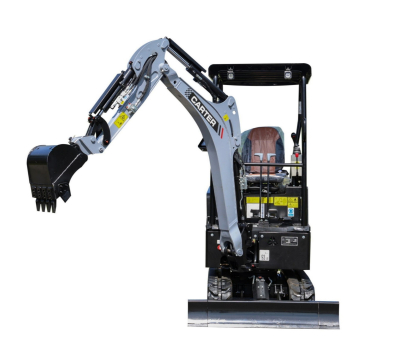
8Ton Crawler Excavator
Manufacturing Process
1. Structural Fabrication
Steel Plate Cutting → CNC laser cutting for precision control
Boom/Arm Forming → Hydraulic press forming and robotic welding
Main Frame Assembly → Multi-point jig alignment + CO₂ shielding weld
2. Machining & Treatment
Boring of hinge points → CNC machining center
Heat treatment → Hardening of pins, bushings, and wear parts
3. Hydraulic & Powertrain Assembly
Hydraulic pump and valve integration
Engine mounting and vibration isolation tuning
Hose routing with abrasion protection sleeves
4. Painting & Surface Treatment
Shot blasting → Removes oxide layers
Primer coating → Corrosion protection
Top coating → Industrial-grade polyurethane
5. Final Assembly and Testing
Electrical system installation
Cabin assembly and safety testing
Hydraulic leakage test under 30–32 MPa
Functional operation simulation (digging, swing, travel)
Product Definition
Designed to excel in space-sensitive and multi-phase projects, this 8-ton class crawler excavator delivers a optimal blend of power, precision, and economy. Its balanced weight and dimensional profile provide excellent stability and mobility for urban redevelopment, pipeline installation, park construction, and roadway repair, while its efficient hydraulic system ensures strong digging force and lower fuel consumption. The model's adaptability to various attachments further extends its utility across different tasks, from grading and trenching to light material handling. Offering both operational flexibility and dependable performance, it stands as a smart investment for contractors seeking a capable, all-round earthmoving solution.
Technical Parameters and Specifications
Operating Weight: 7,800–8,500 kg
Engine Power: 45–55 kW (ISO 14396)
Bucket Capacity: 0.25–0.35 m³
Maximum Digging Depth: 4,000–4,300 mm
Maximum Digging Reach: 6,200–6,500 mm
Travel Speed: 2.8–4.8 km/h (dual speed)
Hydraulic System Flow: 150–180 L/min
Hydraulic Pressure: 28–32 MPa
Swing Speed: 9–11 rpm
Undercarriage Width: 2,000–2,200 mm
Gradeability: 30°
Fuel Tank Capacity: 130–150 L
Structure and Material Composition
Main Components:
Upper Frame: Welded high-strength steel structure
Boom & Arm: Q345B/Q550 special structural steel
Crawler Undercarriage: Reinforced track frame + forged rollers
Hydraulic System: Variable displacement pumps + pilot control valves
Engine Compartment: Tier 3/Tier 4 compliant diesel engine
Cabin: ROPS/FOPS-certified operator cabin
Material Highlights:
High-tensile plates for boom fatigue resistance
Wear-resistant bushings and pin shafts
Forged sprockets and heat-treated track links
Manufacturing Process
1. Structural Fabrication
Steel Plate Cutting → CNC laser cutting for precision control
Boom/Arm Forming → Hydraulic press forming and robotic welding
Main Frame Assembly → Multi-point jig alignment + CO₂ shielding weld
2. Machining & Treatment
Boring of hinge points → CNC machining center
Heat treatment → Hardening of pins, bushings, and wear parts
3. Hydraulic & Powertrain Assembly
Hydraulic pump and valve integration
Engine mounting and vibration isolation tuning
Hose routing with abrasion protection sleeves
4. Painting & Surface Treatment
Shot blasting → Removes oxide layers
Primer coating → Corrosion protection
Top coating → Industrial-grade polyurethane
5. Final Assembly and Testing
Electrical system installation
Cabin assembly and safety testing
Hydraulic leakage test under 30–32 MPa
Functional operation simulation (digging, swing, travel)
Industry Comparison
| Feature | 8 Ton Crawler Excavator | 6 Ton Excavator | 10 Ton Excavator |
|---|---|---|---|
| Digging Force | High for compact-medium tasks | Moderate | Very high |
| Fuel Consumption | Medium | Low | High |
| Operational Cost | Optimized for urban jobs | Lowest | Higher |
| Transport Convenience | Easy on common trailers | Very easy | Moderate |
| Typical Applications | Utilities, landscaping, construction | Light-duty tasks | Heavy site operations |
Application Scenarios
Dealers: Suitable for urban construction fleets, rental business, and mixed-province distribution models.
EPC Contractors: Municipal engineering, pipeline trenching, cable laying, drainage works.
Construction Firms: Foundation preparation, landscaping, demolition, rural development.
Agriculture & Forestry: Land clearing, pond construction, irrigation system building.
Mining & Quarrying: Small-scale loading and stripping work.
Core Pain Points and Solutions
1. Fuel Inefficiency → Variable-displacement pumps optimize flow demand and reduce consumption.
2. Hydraulic Overheating → Enlarged oil coolers improve thermal balance under heavy cycles.
3. Limited Operating Space → Compact tail design enhances maneuverability.
4. Component Wear → Heat-treated pins and reinforced track systems extend service intervals.
Risk Warnings and Mitigation
Improper hydraulic oil replacement can cause pump cavitation.
Working on slopes >30° increases rollover risk.
Low-quality aftermarket filters reduce engine lifespan.
Incorrect track tensioning accelerates undercarriage wear.
Procurement Selection Guide
Confirm job type: trenching, loading, demolition, or municipal tasks.
Check engine compliance: Tier 3/Tier 4 based on region.
Evaluate hydraulic pump brand (e.g., Kawasaki, Bosch Rexroth).
Compare real digging force, not just brochure values.
Inspect boom/arm welding quality and NDT reports.
Review fuel efficiency under standardized test cycles.
Verify parts availability, service network, and warranty terms.
Engineering Case Study
A 8-ton crawler excavator was deployed in a municipal utilities project in Eastern Europe for trenching 1.2 km water pipeline. With a 0.3 m³ bucket and high-flow hydraulic circuit, the machine reduced excavation time by 18% and maintained fuel consumption under 8 L/hour. The compact tail ensured safe operation in narrow streets, while reinforced undercarriage components extended service life in mixed soil conditions.
FAQ
Is an eight ton excavator appropriate for city projects? Yes, it balances energy and maneuverability.
Can it manage small demolition tasks? Yes, with hydraulic breaker attachment.
What is the regular gas consumption? 6–9 L/hour relying on load.
Does it help a couple of attachments? Buckets, breakers, augers, grapples, rippers.
Can it function in tender soil? Wide-track picks furnish stability.
Is the cabin protected? Most fashions provide ROPS/FOPS certification.
How frequently need to hydraulic oil be changed? Typically each and every 1,000–2,000 hours.
What transport gear is needed? Standard flatbed trailers.
Does it aid lengthy working hours? Yes, with cooling structures designed for warmness load.
What assurance is typical? 12–24 months relying on vicinity and components.
Request Quotation / Technical Documents / Samples
For complete technical data sheets, component configuration options, or project-based quotations, please contact our engineering sales team. Support includes OEM specs, performance reports, and on-site application guidance for contractors and distributors.
E-E-A-T Author Credentials
This technical document is written by an equipment engineering specialist with 15+ years of experience in hydraulic excavator design, component integration, and performance validation for international construction machinery markets.