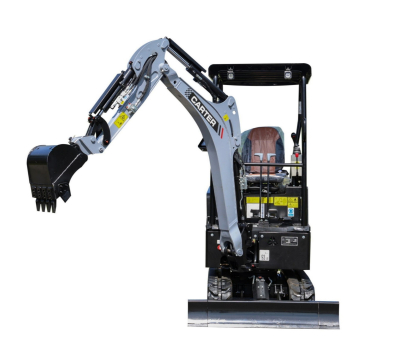
1.8 Ton Mini Excavator
Manufacturing Process
Plate Cutting & Forming: Steel plates are processed using laser cutting and CNC bending to ensure structural accuracy.
Welding Assembly: Frames, booms, and arms are welded using robotic welders with ultrasonic seam inspection.
Precision Machining: Pinholes, cylinder joints, and bearing interfaces undergo CNC machining for alignment tolerances.
Hydraulic Integration: Pumps, main valves, cylinders, and hoses assembled in clean-line hydraulic stations.
Engine & Drivetrain Installation: Engine mounting, cooling system setup, filtration system configuration.
Painting & Surface Treatment: Sandblasting, anti-rust primer, and polyurethane coating for abrasion resistance.
Final Testing: Stability test, hydraulic pressure test, boom/arm load test, travel system performance check.
Definition of 1.8 Ton Mini Excavator
The 1.8 ton mini excavator is a compact hydraulic earthmoving machine designed for trenching, grading, landscaping, utility installation, and small construction sites. It provides enhanced digging force, multi-attachment compatibility, and low operating cost for contractors, rental companies, EPC teams, and engineering project developers.
Technical Specifications
| Parameter | Value |
|---|---|
| Operating Weight | 1700–1900 kg |
| Engine Power | 12–15.5 kW |
| Bucket Capacity | 0.04–0.06 m³ |
| Max Digging Depth | 2200–2450 mm |
| Max Dumping Height | 2400–2650 mm |
| Hydraulic Flow | 28–42 L/min |
| Hydraulic Pressure | 18–24 MPa |
| Travel Speed | 2.2–4.0 km/h |
| Track Type & Width | Rubber Track, 230–250 mm |
| Overall Size | 3500–3800 × 980–1250 × 2250 mm |
Structure and Material Composition
Main Frame: Welded structural steel frame with full-length stress reinforcement for durability.
Boom and Arm: Q345B/ST52 high-strength steel with hardened pins and greased bushings.
Hydraulic System: Piston or gear pump, multi-way valves, auxiliary hydraulic lines, pilot controls.
Undercarriage: Steel-reinforced rubber tracks, track rollers, idlers, tension system.
Counterweight: Cast steel optimized for lifting and stability.
Operator Station: Ergonomic seat, joystick controls, safety lock lever, optional canopy/ROPS.
Power Unit: Diesel engine with direct injection, optimized cooling system, EPA/EU-compliant options.
Electrical System: 12V harness, work lights, fuse box, digital dashboard.
Manufacturing Process
Plate Cutting & Forming: Steel plates are processed using laser cutting and CNC bending to ensure structural accuracy.
Welding Assembly: Frames, booms, and arms are welded using robotic welders with ultrasonic seam inspection.
Precision Machining: Pinholes, cylinder joints, and bearing interfaces undergo CNC machining for alignment tolerances.
Hydraulic Integration: Pumps, main valves, cylinders, and hoses assembled in clean-line hydraulic stations.
Engine & Drivetrain Installation: Engine mounting, cooling system setup, filtration system configuration.
Painting & Surface Treatment: Sandblasting, anti-rust primer, and polyurethane coating for abrasion resistance.
Final Testing: Stability test, hydraulic pressure test, boom/arm load test, travel system performance check.
Industry Comparison
| Category | 1.8 T Mini Excavator | 1.0 T Mini Excavator | 2.5 T Mini Excavator |
|---|---|---|---|
| Digging Depth | 2.2–2.45 m | 1.6–1.9 m | 2.5–2.8 m |
| Fuel Consumption | Low–Medium | Low | Medium |
| Hydraulic Flow | 28–42 L/min | 18–25 L/min | 48–70 L/min |
| Attachment Compatibility | High | Medium | Very High |
| Main Applications | Construction & Utilities | Small residential tasks | Commercial projects |
| Transportability | Pickup + Trailer | Pickup | Requires flatbed |
Application Scenarios
Urban construction, road maintenance, and municipal engineering tasks.
Utility trenching for electrical, fiber-optic, water, and gas systems.
Landscaping, grading, stump removal, and drainage installations.
Small demolition operations and interior foundation excavation.
Agricultural maintenance and small-scale earthmoving operations.
Rental fleets requiring durable and easy-to-operate machines.
Core Pain Points & Engineering Solutions
Limited jobsite space: The slim chassis (≤1250 mm) enables access to narrow work areas.
High maintenance cost: Standardized hydraulic components reduce repair expense and spare parts downtime.
Insufficient hydraulic power: High-flow auxiliary circuits support breakers, augers, and multi-functional attachments.
Operator fatigue during long shifts: Joystick pilot control and ergonomic cabin layout improve stability and reduce strain.
Ground instability: Reinforced undercarriage and optimized counterweight enhance slope and lifting safety.
Risk Warnings & Preventive Measures
Do not exceed lifting capacity—risk of machine tipping and boom deformation.
Avoid contaminated hydraulic oil—may cause pump failure and valve blockage.
Monitor track tension—over-tightening accelerates wear on rollers and idlers.
Operate within slope limits—exceeding 15° may compromise stability.
Perform daily inspections—hoses, pins, and electrical connectors must be secured.
Procurement & Selection Guide
Confirm required digging depth and operating weight based on project type.
Identify engine brand, emission compliance, and power-to-efficiency ratio.
Review hydraulic pump type and flow capacity for attachment requirements.
Evaluate undercarriage strength, track width, and ground pressure.
Compare boom/arm steel grade, welding quality, and structural thickness.
Check canopy/ROPS certification, operator controls, and service access.
Assess spare parts lead time and after-sales technical support capability.
Request test videos, QC reports, and factory inspection documents.
Real Engineering Case
An EPC contractor deployed 1.8 ton mini excavators for a telecom cable installation project across a congested urban district. The machines maintained consistent trench depth of 2.3 m over 18 working days. Productivity increased by 41%, while equipment downtime decreased by 28% due to the machine’s stable hydraulic system and optimized fuel efficiency.
FAQ
What is the fuel consumption? Approximately 1.5–2.2 L/hour depending on load.
Does it support hydraulic breakers? Yes, with adequate flow (28–42 L/min).
What is the standard bucket size? 300–450 mm, optional 200–600 mm.
Is a closed cabin available? Yes, canopy and enclosed cab options are available.
What is the warranty? Typically 12–24 months depending on region.
Is it suitable for rental businesses? Yes, due to ease of operation and durable structure.
Can it work on soft soil? Yes, with wider tracks or dozer blade support.
What attachments can be used? Breaker, auger, rake, grapple, ripper, tilt bucket.
What is the noise level? 78–88 dB depending on engine model.
How often is maintenance required? Normal service interval is 250 hours.
Request Quotation / Technical Files / Samples
To obtain pricing, technical drawings, hydraulic system diagrams, or sample evaluation units, please contact our engineering sales department. Full BOM lists, load charts, and compatibility sheets are available upon request.
E-E-A-T Author Credentials
This article is written by a construction equipment technical specialist with over 14 years of experience in mini excavator structural design, hydraulic system optimization, and procurement advisory for global contractors and distributors.


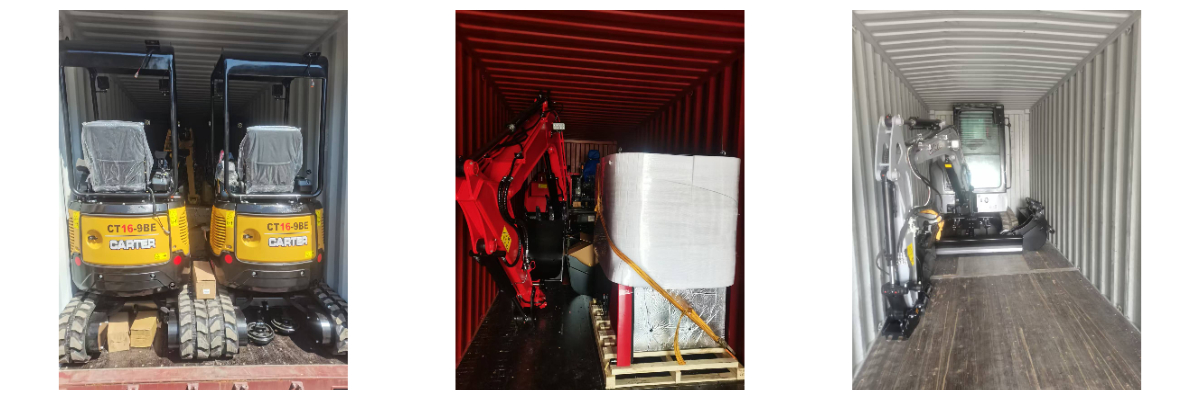
Packaging and transportation of excavators
Relying on professional handling and logistics team, ensure the security of the excavator and efficiently delivered to global customers.A variety of transport options are available such as standard container transport, bulk cargo transport and rail transport.