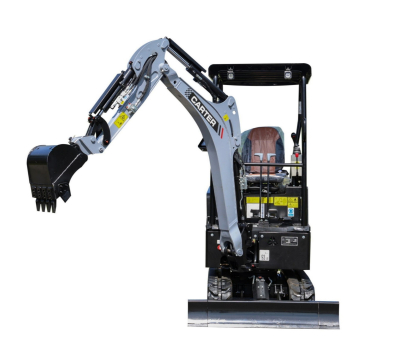
36 Ton Heavy-Duty Excavator
Manufacturing Process
Steel Cutting & Forming: CNC laser/robotic plasma cutting ensures uniform structural precision.
Robotic Welding: Boom and frame welded using MAG fusion welding robots for stress reduction.
Machining: Cylinder lugs, bushings, and pivot points machined to ±0.02 mm tolerance.
Painting Process: Shot blasting (SA2.5), epoxy primer, polyurethane topcoat for corrosion resistance.
Assembly Line: Powertrain integration, hydraulic calibration, electronic system setup.
Testing & Validation: Pressure tests, load cycle tests, and simulated field duty tests before delivery.
Product Definition
The 36 Ton Heavy-Duty Excavator is a high-capacity earthmoving machine engineered for large-scale construction, mining stripping, foundation excavation, and infrastructure development. It features a reinforced boom, high-output hydraulic system, and heavy-duty undercarriage designed for sustained operation in demanding environments.
Technical Specifications and Parameters
| Parameter | Value |
|---|---|
| Operating Weight | 35,500–36,800 kg |
| Engine Power | 180–220 kW (Tier 3/Tier 4 Final) |
| Bucket Capacity | 1.6–2.1 m³ (rock/earthmoving) |
| Hydraulic Flow | 2 × 260–300 L/min |
| Maximum Digging Depth | 6,500–7,200 mm |
| Maximum Reach | 10,000–11,000 mm |
| Track Width | 600–700 mm |
| Swing Speed | 8.5–10.5 rpm |
| Gradeability | 70% (35°) |
| Fuel Tank Capacity | 500–620 L |
Structure and Material Composition
Main Boom & Arm: High-strength low-alloy steel (Q345/Q460) with full-length reinforcement plates.
Undercarriage: X-type frame, forged track links, heat-treated rollers.
Cabin: ROPS/FOPS-certified protective cabin with laminated safety glass.
Hydraulic System: Variable displacement piston pumps, heavy-duty main valve block.
Engine Compartment: Large-capacity cooling module, multi-stage filtration.
Electrical System: CAN-bus architecture with IP67 connectors.
Manufacturing Process
Steel Cutting & Forming: CNC laser/robotic plasma cutting ensures uniform structural precision.
Robotic Welding: Boom and frame welded using MAG fusion welding robots for stress reduction.
Machining: Cylinder lugs, bushings, and pivot points machined to ±0.02 mm tolerance.
Painting Process: Shot blasting (SA2.5), epoxy primer, polyurethane topcoat for corrosion resistance.
Assembly Line: Powertrain integration, hydraulic calibration, electronic system setup.
Testing & Validation: Pressure tests, load cycle tests, and simulated field duty tests before delivery.
Industry Comparison
| Feature | 36 Ton Heavy-Duty Excavator | 30 Ton Excavator | 50 Ton Excavator |
|---|---|---|---|
| Operating Weight | 36T | 30T | 50T |
| Typical Use | Mining + Earthmoving | General Construction | Large Mines & Quarries |
| Fuel Consumption | Moderate | Lower | High |
| Mobility | High | Very High | Limited |
| ROI | Balanced | Fast | Long-Term |
Application Scenarios
EPC contractors performing deep foundation excavation.
Mining operators conducting stripping, loading, and haul road construction.
Municipal engineering for pipelines and large infrastructure foundations.
Aggregate quarrying including rock breaking and hydraulic hammer operations.
Civil contractors engaged in bulk earthworks and slope stabilization.
Core Pain Points & Engineering Solutions
High fuel consumption → adopt electronically controlled fuel mapping and large-torque low-RPM engines.
Component wear in heavy-duty environments → use reinforced bushings, high-strength steel, upgraded seals.
Hydraulic overheating → multi-layer radiator and independent cooling fan systems.
Downtime due to maintenance difficulty → modular engine bay and grouped service ports.
Risk Warnings & Mitigation
Avoid overloading attachments beyond rated bucket capacity.
Conduct daily hydraulic oil inspections to prevent pump damage.
Use certified operators to prevent boom stress failures.
Strictly follow 500-hour service cycles to maintain warranty validity.
Procurement Selection Guide
Define project requirements: volume, soil type, operation hours/day.
Confirm engine emission standard for target market (Tier 3/4F).
Evaluate hydraulic pump flow and cycle time efficiency.
Check undercarriage reinforcement, rollers, and track shoe grade.
Verify attachment compatibility: buckets, hammers, grapples.
Assess supplier production capacity and after-sales support.
Request field test data and durability testing reports.
Engineering Case Study
A Middle Eastern EPC contractor deployed twelve 36 Ton Heavy-Duty Excavators for a desert highway project. Machines operated 14 hours/day under 48°C ambient temperature. The optimized cooling system reduced hydraulic overheating by 37%, and reinforced booms extended service life by 22%, resulting in measurable downtime reduction and improved excavation productivity.
FAQ
What engine power is recommended? 180–220 kW depending on duty cycle.
Is it suitable for rock work? Yes, with reinforced boom and rock bucket.
What emission standards are available? Tier 3, Tier 4 Final.
How often is maintenance required? 250h inspection, 500h service cycle.
Can it support hydraulic breakers? Yes, with high-flow auxiliary circuits.
What is typical fuel consumption? 22–32 L/h depending on load.
What is the average lifecycle? 10,000–18,000 hours with proper maintenance.
Is telematics available? Optional GPS + remote diagnostics.
How to transport a 36T machine? Requires lowbed trailer with 50T GVW.
Can the boom be customized? Yes, long-reach and mass-excavation booms available.
Call to Action (CTA)
For detailed technical sheets, engineering drawings, or project-based quotations for the 36 Ton Heavy-Duty Excavator, please contact our technical sales team to obtain certified specifications and sample configurations.
E-E-A-T Author Credentials
This article is written by a senior heavy-equipment engineering consultant with 12+ years of experience in excavator powertrain design, hydraulic system calibration, and construction equipment lifecycle management. Contributor to multiple EPC machinery standards and global procurement guidelines.


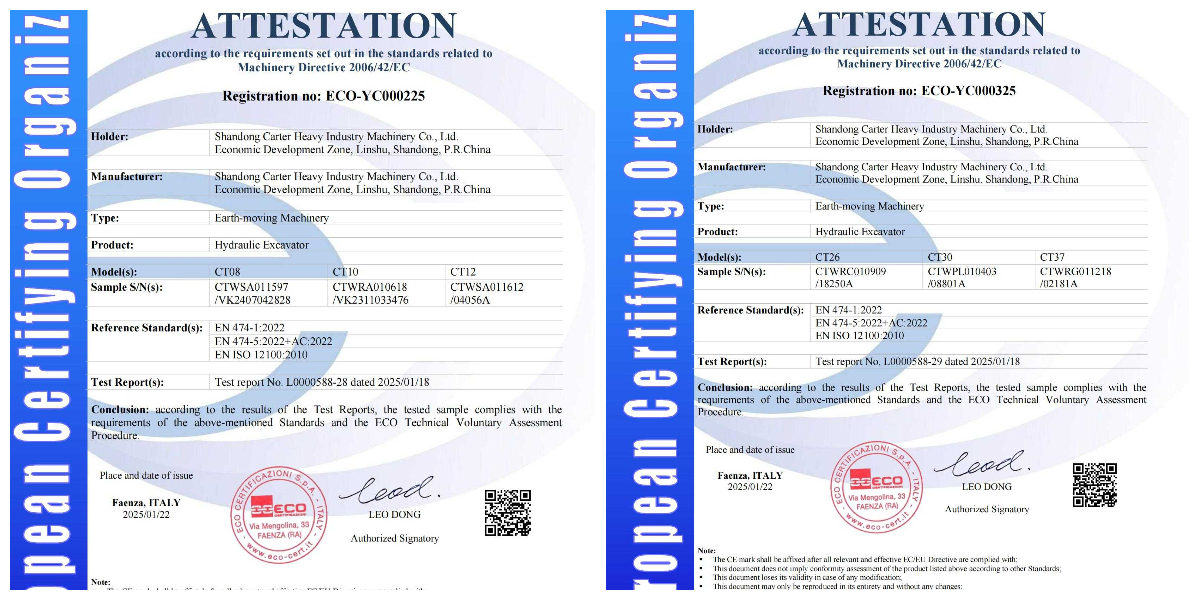

📍Inquire Now (CARTER Button):
📞 Call/WeChat +86 15064983182 | 📧ct008@carter.cn | 🤙WhatsApp +86 15064983182